

The French Paradox: Red Wine for a Healthy Mind?

Known since 1992, the French diet is high in saturated fats, a risk for coronary heart disease (CHD), yet they have less than half the CHD-related deaths compared to the US, Sweden, and the UK. High intake of wine, thought to be 57% of alcohol consumption in France, may contribute to this disproportionately low frequency of CHD representing the French paradox. However, heavy alcohol consumption is associated with increased risk of heart attack, arrhythmia, hypertension, and sudden death. This raises the question; How does wine consumption improve cardiovascular health?

Wine, particularly red wine, contains high levels of phenols. One phenol, resveratrol, may contain cardiovascular protectant properties. It inhibits oxidative stress caused by free radicals, preventing cell damage or death. Resveratrol appears to increase lifespan and promote healthy aging. Fruit flies, fish, and nematodes given resveratrol increase their lifespan significantly! In humans low to moderate amounts of wine consumption are associated with decreased cardiovascular- and cerebrovascular disease-related deaths.

Moderate consumption of wine is also associated with lower instances of Alzheimer’s disease (AD). Normally, proteasomes are responsible for degradation of damaged and aggregated proteins such as Aβ, but their activity is impaired in AD. Oxidative stress inactivates proteasomes, which can be prevented with resveratrol administration in disease-model cell cultures. Administration of resveratrol in vitro correlates to increased intracellular degradation of Aβ by proteasomes, suggesting that moderate wine consumption may decrease one’s likelihood of developing AD. Synthetic resveratrol supplements are new to the field and require further research.

One year of resveratrol supplementation (500-2000 mg per day) slowed decline in cognition and function compared to placebo. Yet other studies found no difference with supplementation over 52 weeks. Larger studies over a longer duration are needed. Pterostilbene, a synthetic resveratrol analog, has much higher oral bioavailability and blood-brain barrier permeability warranting further research. Resveratrol administration correlates with decreased central nervous system (CNS) deposition of Aβ, and increased brain shrinkage in AD patients as a product of reduced neuroinflammation.

Resveratrol benefits a variety of other physiological functions, too. It delays or prevents cell death in a variety of cell types, decreases atherosclerotic lesion formation, reduces risk for hypercholesterolemia, maintains glucose homeostasis in diabetes, and promotes tumor suppressor gene expression. In rat models of Lewis lung carcinoma, resveratrol decreases tumor size, weight, and metastasis, indicating a diverse range of effects on chemoprevention. It has powerful effects on energy metabolism. In mice, administration increased aerobic capacity as evidenced by increased running time and oxygen consumption in muscle fibers. Its effects on energy metabolism might also minimize damage from secondary spinal cord injuries. Further research in human models is needed to validate it as a therapeutic.

While resveratrol’s impacts on cognition and AD are inconclusive, it has potential to benefit health in a variety of other ways, which may justify a glass of red wine every so often. If you can’t drink wine, resveratrol is also present in a number of foods, including grapes, peanuts, soybeans, apples, and pomegranates. Red wines contain concentrations between 0.361-1.972 mg/L, meaning that one would have to drink many bottles of wine to achieve the hypothesized therapeutic dose (TD) of 1 gram per day. Even including resveratrol containing foods such as peanuts (0.03-0.14 μg/g) and apples (400 μg/kg) does not reach the TD.  However, these measurements only account for unbound resveratrol. Food and drinks containing pure resveratrol also contain molecular constituents and resveratrol glucosides which occur in higher concentrations and, in some cell culture and animal studies, show higher potency than resveratrol itself. These molecules may actually be the driving force behind the French Paradox, but focused research and clinical trials will be required to confirm this hypothesis.

There are also supplemental tablets derived from Japanese knotweed containing a therapeutic dose of concentrated resveratrol. Unfortunately, research has shown that these supplements are a less effective source of resveratrol as it’s bioavailability and absorption is enhanced by the food matrix present in its naturally occurring forms. Regardless, with so many beneficial impacts in the body and no serious adverse effects we could all stand to increase our resveratrol intake – whether it comes from a glass of red wine, a handful of peanuts, or a supplement. This week, go out and live like the French!
Facebook
Twitter
Email
Sources: 
Renaud, S., & de Lorgeril, M. Wine, alcohol, platelets, and the French paradox for coronary heart disease [Internet]. Epidemiology. 1992. Available from: https://www.thelancet.com/journals/lancet/article/PII0140-6736(92)91277-F/fulltext
Catalgol, B., Batirel, S., Taga, Y., & Kartal Ozer, N. Resveratrol: French paradox revisited [Internet]. Frontiers in Pharmacology. 2012. Available from: https://www.frontiersin.org/articles/10.3389/fphar.2012.00141/full#B160 
Marambaud, P., Zhao, H., & Davies, P. Resveratrol Promotes Clearance of Alzheimer’s Disease Amyloid-β Peptides [Internet]. Journal of Biological Chemistry. 2005. Available from: http://www.jbc.org/content/280/45/37377.long
Keller, J. N., Hanni, K. B., & Markesbery, W. R. Impaired Proteasome Function in Alzheimer’s Disease [Internet]. Journal of Neurochemistry. 2000. Available from: https://onlinelibrary.wiley.com/doi/pdf/10.1046/j.1471-4159.2000.0750436.x
Moussa, C., Hebron, M., Huang, X., Ahn, J., Rissman, R. A., Aisen, P. S., & Turner, R. S. Resveratrol regulates neuroinflammation and induces adaptive immunity in Alzheimer’s disease [Internet]. Journal of Neuroinflammation. 2017. Available from: https://www.ncbi.nlm.nih.gov/pmc/articles/PMC5234138/
Meng, J., Chen, Y., Bi, F., Li, H., Chang, C., & Liu, W. Pterostilbene attenuates amyloid-β induced neurotoxicity with regulating PDE4A-CREB-BDNF pathway [Internet]. 2019. Available from: https://www.ncbi.nlm.nih.gov/pmc/articles/PMC6834512/
Ungvari, Z., Orosz, Z., Rivera, A., Labinskyy, N., Xiangmin, Z., Olson, S., Podlutsky, A., & Csiszar. Resveratrol increases vascular oxidative stress resistance [Internet]. 2007. Available from: https://www.physiology.org/doi/full/10.1152/ajpheart.01258.2006?url_ver=Z39.88-2003&rfr_id=ori:rid:crossref.org&rfr_dat=cr_pub%3dpubmed
Weiskirchen, S., & Weiskirchen, R. Resveratrol: How Much Wine Do You Have to Drink to Stay Healthy? [Internet]. 2016. Available from: https://www.ncbi.nlm.nih.gov/pmc/articles/PMC4942868/
https://clinicaltrials.gov/ct2/show/study/NCT01504854?term=resveratrol&recrs=e&draw=5&rank=33

The Gut-Brain Axis: Part 3 of 3

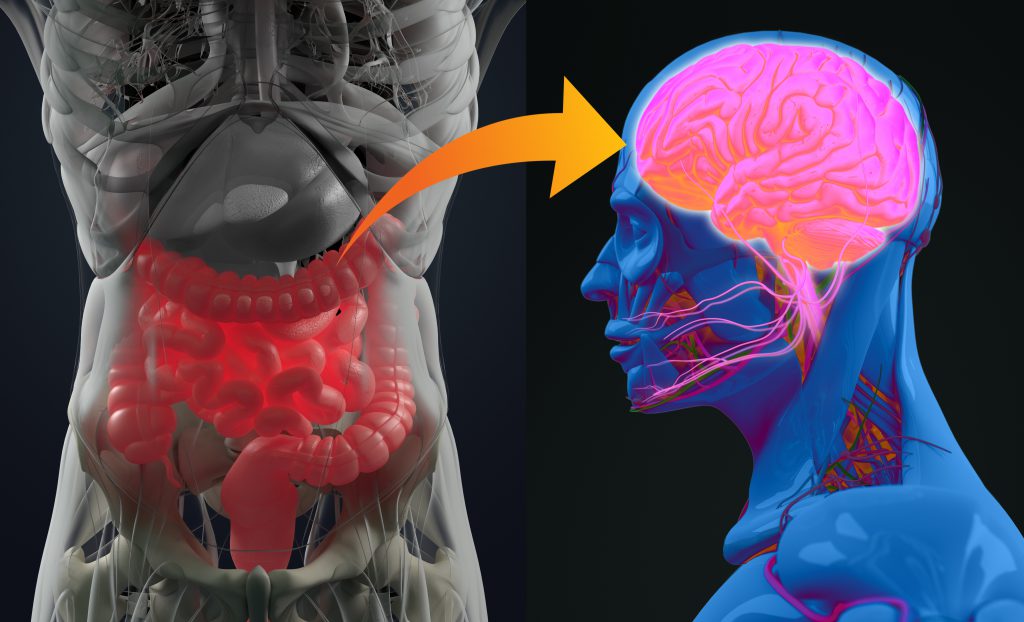
       We recently introduced the gut-brain axis as a bidirectional communication loop. Our bodies control, yet are in part controlled, by the living microorganisms within our gut. An irregularity at either end of the gut-brain axis often leads to poorer health, so are there ways to ensure a healthy microbiome? Welcome to part 3!—The final chapter of our series where we discuss what we can do to ensure gut health!

       Diet is a key mediator of your microbiome. Foods high in fiber, changes in fat intake, and timing of meals all effect the microbiome components and its function. Humans consuming a Mediterranean diet (MD) boosted their microbiome diversity compared to their western diet (WD) counterparts. The MD consists of large amounts of plant-based foods and a higher proportion of monosaturated fats, rather than the WD which contains high amounts of saturated fats, animal proteins, and sugars. Diets high in grains, vegetables, beans, nuts, and the like appear to be healthiest for our gut microbiome.

       Fecal samples were analyzed from individuals with (Alzheimer’s disease) AD and those without to categorize metabolites associated with AD. Metabolites, or postbiotics, are byproducts given off by our gut microbes as they digest our food. A ranking of grouped foods was created based on their strength of association to AD. Interestingly, the healthiest food rankings not associated with AD approximately mirror the MD food pyramid, emphasizing the importance of a proper diet for microbiome and overall host health.

       The internal process regulating our sleep-awake cycle is called the circadian rhythm, making it natural for us to experience half of our 24-hour day active and feeding versus the other half resting and fasting. With the development of artificial lights, humans are no longer bound to feeding only during the light phase of the day. Emerging preclinical research suggests that our gut microbiome maintains a similar circadian rhythm to us, evoking the importance of eating patterns like frequency and timing of food intake. Night shift workers that consume their meals at night are at a 40%-60% increased risk of developing obesity and metabolic syndrome, indicating how important it is for our health to adhere to our circadian rhythm, which is largely dictated by the sun. Furthermore, adding light to the night cycle of mice results in metabolism disruption, with an increased body mass index (BMI) and insulin resistance compared to mice with a proper dark/light cycle, suggesting the importance of a consistent night of sleep with minimal disruption.

       Probiotics are living microorganisms that provide health benefits when consumed in adequate quantity. Although found naturally, like in yogurts and sauerkraut, they’re most often consumed as an over the counter (OTC) supplement not requiring FDA regulation. Prebiotics are additional OTC supplements taken with probiotics and contain plants and grains to support the probiotic strains growth and establishment in the gut. These supplements are filled with a variety of bacterial strains thought to be beneficial, like Lactobacillus, and Bifidobacterium. In humans, broad-spectrum probiotics attenuated stress-induced reductions in cognition, but had no effects in the absence of stress. Probiotics were also shown to reduce depressive symptoms in individuals with irritable bowel syndrome (IBS). Diabetic individuals taking probiotics improve their brain functioning and synaptic activity compared to diabetics not taking probiotics.

       Chronic ingestion of fermented milk with probiotics was associated with reduced task responsiveness in humans compared to those on control treatment. Other studies show no difference in microbiome compilation or cognition in individuals using pre- and probiotics compared to those not. Unfortunately, our current understanding of pre-and probiotics ranges is scarce indicating the need for further research identifying harmful and beneficial strains in
those that are healthy and diseased.

       Fermented foods and drinks like kimchi and kombucha are rich in probiotics. Kombucha, made by fermenting tea and sugar with live bacteria and yeast, originated in China around 220 B.C.. It’s worldwide popularity has recently increased with the understanding of how integral our microbiomes are for our health. Since 2017, kombucha and other probiotic drink sales increased by almost 40% and is currently considered the fastest growing product in the functional beverage market.

So does it work? 

      In animal studies the probiotic drink shows evidence of anti-tumor and anti-cancer properties, and can help to inhibit neurodegenerative diseases. Unfortunately, no controlled studies with human subjects have shown any evidence of these benefits indicating the need for regulated clinical trials. Yet, the consumer market would have you believe otherwise. Luckily, it’s not considered harmful if consumed by a healthy individual at 4oz. or less per day. However, it does contain small amounts of alcohol and is therefore not recommended for pregnant women.

       Smoking and drinking have historically been known to harm the lungs and heart, but it turns out the damage is more systemic than that. Smoking induced alterations of the microbiome resemble those of obesity and inflammatory bowel disease (IBD). The cessation of smoking reversed the microbiome changes indicating that kicking the habit could return your gut to better health. Alcohol reduces bacteria with anti inflammatory activity within the gut. Alcohol and smoking both negatively affect the microbiome.

       AD drugs that inhibit the acetylcholinesterase enzyme have negative effects on rat microbiomes demonstrating that some AD drug treatments may lead to a worsening of AD pathology long-term. Although current AD drugs temporarily relieve the symptoms associated with the disease they tend to lose efficacy rather quickly, generally in a span of a couple years. The use of pre- and probiotics in conjunction with AD treatments may prevent or correct this gut dysbiosis allowing the therapeutic effects to be exploited more completely. Drugs like antibiotics decrease microbial diversity and can allow for the overpopulation of bad microbes within the gut which may also be prevented by pre- and probiotics.

       Our lifestyle has great capacity in determining our gut microbial health, which in turn affects our comprehensive health. We have the ability to maintain or modify our regiments, staying or becoming healthier by choosing good habits, like eating a proper diet. Considering the gut microbiome has vast local and systemic effects, it’s possible the future will be filled with a large variety of probiotics used to treat most any ailment, but for now more research is needed. Identifying what the good and bad microbes are still needs clarification, in addition to what makes them such. Clinical trials with the determined good microbes as treatment may then be better established. Until then, keep your diet lean and regular, don’t smoke or drink, and get good sleep routinely! Until next time!

Facebook
Twitter
Email
Sources: 
Angelucci, Francesco, et al. “Administration of Pre/Probiotics with Conventional Drug Treatment in Alzheimer’s Disease.” Neural Regeneration Research, vol. 15, no. 3, 2020, p. 448., doi:10.4103/1673-5374.266057.
Biedermann, Luc, et al. “Smoking Cessation Induces Profound Changes in the Composition of the Intestinal Microbiota in Humans.” PLoS ONE, vol. 8, no. 3, 2013, doi:10.1371/journal.pone.0059260.
Capurso, Gabriele, and Edith Lahner. “The Interaction between Smoking, Alcohol and the Gut Microbiome.” Best Practice & Research Clinical Gastroenterology, vol. 31, no. 5, 2017, pp. 579–588., doi:10.1016/j.bpg.2017.10.006.
Chen, Yang, and Rong Xu. “Context-Sensitive Network Analysis Identifies Food Metabolites Associated with Alzheimer’s Disease: an Exploratory Study.” BMC Medical Genomics, vol. 12, no. S1, 2019, doi:10.1186/s12920-018-0459-2.
Garcia-Mantrana, Izaskun, et al. “Shifts on Gut Microbiota Associated to Mediterranean Diet Adherence and Specific Dietary Intakes on General Adult Population.” Frontiers in Microbiology, vol. 9, 2018, doi:10.3389/fmicb.2018.00890.
Kaczmarek, Jennifer L, et al. “Complex Interactions of Circadian Rhythms, Eating Behaviors, and the Gastrointestinal Microbiota and Their Potential Impact on Health.” Nutrition Reviews, vol. 75, no. 9, 2017, pp. 673–682., doi:10.1093/nutrit/nux036.
Kapp, Julie M., and Walton Sumner. “Kombucha: a Systematic Review of the Empirical Evidence of Human Health Benefit.” Annals of Epidemiology, vol. 30, 2019, pp. 66–70., doi:10.1016/j.annepidem.2018.11.001.
Nagpal, Ravinder, et al. “Gut Microbiome-Mediterranean Diet Interactions in Improving Host Health.” F1000Research, vol. 8, 2019, p. 699., doi:10.12688/f1000research.18992.1.
Papalini, et al. “Stress Matters: a Double-Blind, Randomized Controlled Trial on the Effects of a Multispecies Probiotic on Neurocognition.” 2018, doi:10.1101/263673.
Tillisch, Kirsten, et al. “Consumption of Fermented Milk Product With Probiotic Modulates Brain Activity.” Gastroenterology, vol. 144, no. 7, 2013, doi:10.1053/j.gastro.2013.02.043