Clinical Trial Myths vs Facts

Clinical trials tend to have a cloud of negative talk hovering over them. Participating in something that involves your health can be daunting and scary, and unfortunately, this fear has led to some misconceptions about participating in clinical research trials.

Here are some of the common Myths/Facts surrounding clinical trial participation:

Myth: Clinical trials are dangerous.

Fact: There will always be risks associated with medical research when testing new and unproven treatment options. Uncomfortable side effects may occur. However, clinical trials are federally regulated and there are ethical and legal codes that apply to each study. If you are considering participating it is important to discuss risks and benefits with your doctor. All studies are voluntary and participants can withdraw at any time.

Myth: The quality of care is not as good as the care I currently receive with my doctor.

Fact: Clinical trial participants receive a high level of care and are highly monitored for any side effects that may occur. All participants are able to discuss any areas of concern with the study staff, and the participants primary care provider may also be involved. For some living with Alzheimer’s disease, research shows that they do better while participating in clinical trials.

Myth: Clinical trials will not accept me as a participant because I have another disease or condition.

Fact: Other chronic medical conditions may be present along with Alzheimer’s disease, and some clinical trials may be designed to accommodate this. Each study has its own inclusion and exclusion criteria. When discussing participation during the informed consent process, be sure to let the study team know of any medical conditions that are present. 

Myth: If clinical trials are so important, my doctor will encourage me to participate.

Fact: There are hundreds of clinical research studies being done across the country. Your physician may not be aware of which of these studies are in your area, or which studies you may be eligible to participate in. Be sure to discuss any clinical trial opportunities you find with your doctor.

Myth: Clinical trials are not confidential.

Fact: When you enroll in a study there are pieces of personal information that will need to be collected and shared with the study team and study sponsor. This generally includes date of birth, medical history, any results collected throughout the study etc. This information is kept confidential to an extent which means that it is given a blinded number to protect your identity throughout the study. Although your information is shared with the study sponsor and FDA, it is our highest priority to maintain our participants information and dignity.

Myth: The study site/team knows who is actually getting the drug.

Fact: In randomized clinical trials there is a group receiving a placebo and a group receiving the study drug. Neither participants nor study team is aware of which participant is receiving a placebo or not. This information is not released until the closing of each study. Make sure that you are okay with the potential chance of getting a placebo when considering participation in a clinical trial.

Myth: The drugs being tested in clinical trials haven’t been tested on humans yet, I’d just be a “guinea pig.”

Fact: The drugs tested in clinical trials have been researched and evaluated multiple times before they can be used in a clinical trial.

Myth: Clinical Trials don’t work.

Fact: Clinical trials are needed to find safe and effective new treatments for various medical conditions. Some trials show more success than others, but not all trials are failures.

Here are two videos that may be helpful when considering a clinical trial. Clinical Trials.gov also has a helpful page with Questions To Ask, and the Alzheimer’s Association has a page discussing How Clinical Trials Work.

Facebook
Twitter
Email
Sources: 
10 Misconceptions About Clinical Trials Debunked [Internet]. Rox Medical. 2018 [cited 2019Apr29]. Available from: https://www.roxmedical.com/news/10-clinical-trial-misconceptions/
Clinical Trials: Myths vs. Facts [Internet]. Alzheimer’s Disease and Dementia. [cited 2019Apr29]. Available from: https://www.alz.org/alzheimers-dementia/research_progress/clinical-trials/myths-vs-facts
How Clinical Trials Work [Internet]. Alzheimer’s Disease and Dementia. [cited 2019Apr29]. Available from: https://www.alz.org/alzheimers-dementia/research_progress/clinical-trials/how-trials-work
Learn About Clinical Studies [Internet]. ClinicalTrials.gov. [cited 2019Apr29]. Available from: https://clinicaltrials.gov/ct2/about-studies/learn




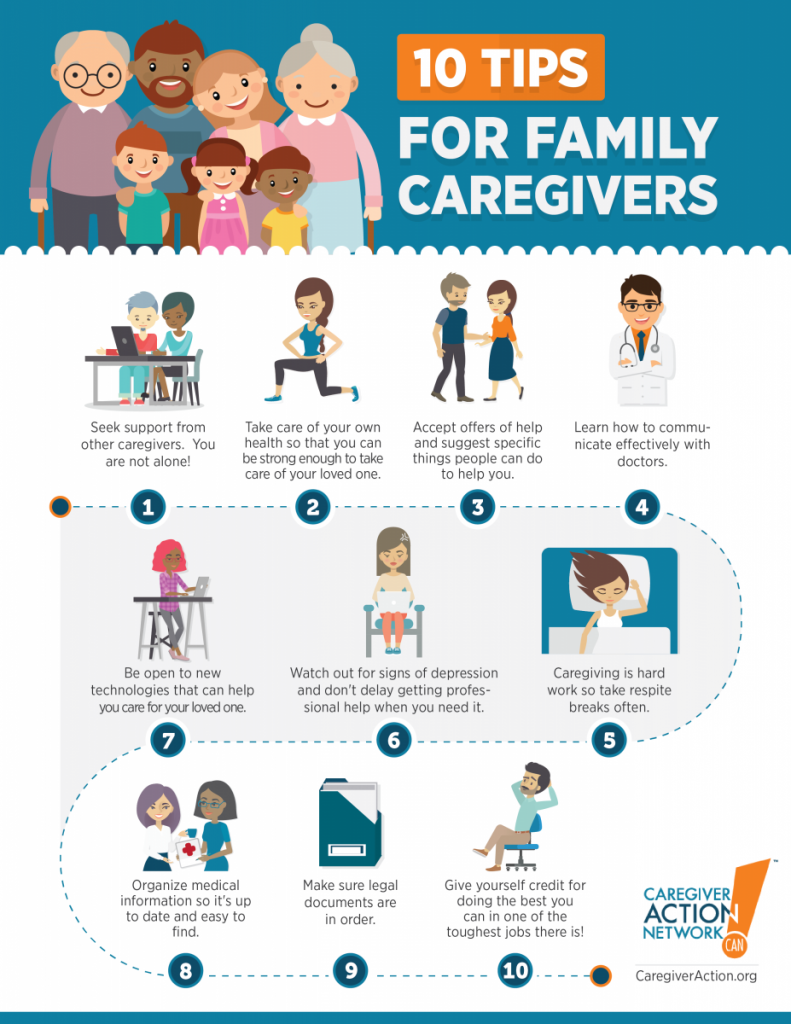
Tips and Resources For Caregivers

According to the Alzheimer’s Association, 16.1 million Americans provide unpaid care for people with Alzheimer’s disease or other dementias, resulting in an estimated 18.4 billion hours of care.

While being a caregiver is gratifying, it is also associated with physical, psychological, and financial burdens. It is common for caregivers to report a decline in their own health while caring for another, and it compromises their ability to be a reliable and effective caregiver. Many caregivers report having less time for family and friends, experiencing increased emotional stress, and decreased self-care. Self-care includes maintaining healthy dietary, exercise, mental health, and sleep habits. [1]

It is important that caregivers receive support and develop a system that allows them to tend to their own mental and physical health. Caregivers need to take breaks, monitor their own health, practice self-care, and seek out a support group or similar resource when needed. The stress associated with being a caregiver can result in depression and anxiety.

The Caregiver Action Network (CAN) states:

  • Family caregivers who provide care 36 hours or more weekly are more likely than non-caregivers to experience symptoms of depression and anxiety.
  • Spouses providing care experience symptoms of depression or anxiety at a rate of six times higher than non-caregivers.
  • Family caregivers caring for a parent experience symptoms of depression or anxiety at a rate that is twice as high as non-caregivers.

 The CAN provides resources to monitor caregiver depression including a caregiver depression test, found here.

There are many online resources that give caregivers access to informational video resources, discussion forums, helpful checklists, safety tips and more. Every person’s experience with Alzheimer’s disease is unique and different, but having basic resources available to turn to can provide comfort and help reduce stress.

I’d like to share two main resources. The first being The Caregiver Action Network (CAN), a non-profit organization mentioned earlier. Their site offers a caregiver toolbox loaded with helpful tips, as well as, access to an online care community, video and story library, ways to cope with Alzheimer’s disease etc.

 CAN offers information for any caregiver, not just those caring for someone with Alzheimer’s disease. The website primarily focuses on Alzheimer’s, Huntington’s, Parkinson’s, and COPD. Their website can be accessed here. 

The second great resource I’d like to mention is the Alzheimer’s Association. Their website provides information and educational material for those living with Alzheimer’s, caregivers, and volunteers. The Alzheimer’s Association offers many support groups for those with Alzheimer’s as well as their caregivers. To find support groups in your area click this link. 

Additional support can be found via the National Institute on Aging and the Family Caregiver Council. 

Facebook
Twitter
Email
Sources: 
[1] Collins, Lauren & Swartz, Kristine. (2011). Caregiver Care. American family physician. 83. 1309-17.
[2] Depression Test [Internet]. Screening 2 Supports. [cited 2019Apr19]. Available from: https://screening.mentalhealthamerica.net/screening-tools/depression?ref=CAN
[3] Home [Internet]. Caregiver Action Network. [cited 2019Apr19]. Available from: https://caregiveraction.org/

IDEAS Study Results

The Imaging Dementia-Evidence for Amyloid Scanning (IDEAS) Study was a 12 month, observational, open-label, longitudinal study done from February 2016 to December 2017. This study was done to assess the impact of amyloid PET scans on patient outcomes. An amyloid PET scan of the brain can identify underlying Alzheimer’s disease even in people with no cognitive complaints. The study was made up of 18,848 participants who were referred by qualified dementia specialists and met inclusion criteria specific to this study, including mild cognitive impairment or mild dementia.

The study hypothesized that, in diagnostically uncertain cases, knowledge of amyloid status as determined by a positive amyloid PET will lead to significant changes in patient management, and that this will translate into improved long-term outcomes.

What did the study find?

The press release announcing the IDEAS Study publication states that the study revealed that providing clinicians with the results of PET scans that identify amyloid plaques in the brain changed medical management – including the use of medications and counseling – in nearly two-thirds of cases. The study also showed that amyloid PET scans altered the diagnosis of the cause of cognitive impairment in more than one in three study participants.

The Alzheimer’s Association chief science officer and co-author of the study, Dr. Maria C. Carrillo, PhD, stated that these study results, “Present highly credible, large-scale evidence that amyloid PET imaging can be a powerful tool to improve the accuracy of Alzheimer’s diagnosis and lead to better medical management, especially in difficult-to-diagnose cases.”

The Center for Medicare & Medicaid Services’ (CMS) wanted to find out if it would be worthwhile to reimburse for amyloid PET scans. These scans are very expensive and not covered by Medicare or health insurance plans, making them inaccessible to those who might benefit from them. For the cost to be covered by CMS, it must be demonstrated that the patient outcomes are affected by the result of a scan. It is unclear if the results from this study will help persuade the CMS on this matter.

A second phase of the IDEAS Study recently ended in February 2019, however, it may take up to a year to be published. Conducting another IDEAS Study in the future with a more diverse study population and to address other gaps in the previous study is also being discussed.

For more information about the IDEAS Study visit the following links:

If you are interested in other biomedical research, visit JAMA’s website.

Facebook
Twitter
Email
Sources:
Results from IDEAS Study Published [Internet]. ALZFORUM. [cited 2019Apr16]. Available from: https://www.alzforum.org/news/research-news/results-ideas-study-published
DanThemes. [Internet]. The IDEAS Study – Brain amyloid imaging in Alzheimer’s disease. [cited 2019Apr16]. Available from: https://www.ideas-study.org/about/educational-resources/the-ideas-study-brain-amyloid-imaging-in-alzheimers-disease/
Imaging Dementia-Evidence for Amyloid Scanning (IDEAS) Study – Full Text View [Internet]. Imaging Dementia-Evidence for Amyloid Scanning (IDEAS) Study – Full Text View – ClinicalTrials.gov. [cited 2019Apr16]. Available from: https://clinicaltrials.gov/ct2/show/NCT02420756?term=IDEAS&cond=Alzheimer Disease&cntry=US&rank=3

Hobbies, Are They Really That Important?

Many of us are stretched for time and lead busy lifestyles. By the time we reach the end of our day, the idea of sitting in front of the TV seems very appealing.

However, there could be a more proactive and beneficial use of our time! It may seem like we don’t have time for hobbies, but hobbies that are developed or maintained early on in our lives may help us stave off the symptoms of Alzheimer’s disease or other dementias.

Hobbies may protect our brain. An article in Psychology Today states that engaging in a hobby at least one hour per day may protect against Alzheimer’s later in life. Hobbies may also help improve your function as you age. A 2016 study found that those without hobbies or a perceived purpose in life have a significantly higher risk of not only mortality, but also a decline in activities of daily living [6].

Not only can a hobby keep your cognitive abilities strong, it can also have positive effects on your mood. Hobbies are fun and enjoyable. They can provide comfort, reduce the risk of depression, increase socialization, and even improve physical health.  Art  based hobbies provide a chance for self-expression and a chance to process reactions to emotions and ideas. An article exploring the link between painting and dementia states that, “Artistic production itself is a complex cognitive behavior involving at least vision, praxis, memory, and executive functions: this list does not even consider the kind of emotional processing and inspirations that might give birth to such art” [1]. A 2011 study states that art therapy has been reported to improve attention, interest,  joy, self-respect, and quality of life in those with dementia [3]. The National Institute on Aging states that engaging in creative activities can improve creativity, memory, and problem solving skills. Some art related hobbies include drawing, painting, collage, knitting, weaving, coloring, do it yourself (DIY) projects, and woodworking.

If you are reading this and currently don’t practice any hobbies, don’t fret! New hobbies can always be learned and will help stimulate your brain. Starting a new hobby can help you acquire new skills that may serve you later in life. Remember to stay socially active as well. Interacting with others is very important and even provides an opportunity to share your hobbies with others. Here is a list of possible hobbies: playing cards, gardening, swimming, yoga, photography, caring for a pet, or volunteering. The Alzheimer’s Association says that physical activities increase blood and oxygen flow to the brain and improve brain health. Walking is a great physical hobby!

 If you or your loved one is currently diagnosed with Alzheimer’s disease or a form of dementia, hobbies can help increase a sense of purpose in life and overall quality of life throughout the stages of the disease. Alzheimer’s patients without daily hobbies may experience a faster progression of symptoms or  worsening cognitive function. Many hobbies can be even adapted to be more enjoyable for those with dementia as their symptoms worsen. Cooking can serve as a hobby, as well as, encourage socialization and interaction with others. Indulging in your loved ones hobbies can help them better deal with the loss of their cognitive abilities. If you are a caregiver to a loved one with Alzheimer’s, click on this link for some Tips to Help a Person With Dementia Make An Activity Fun. The repetitive aspect that hobbies provide helps those with Alzheimer’s continue to do things that bring them joy. An article in the American Journal on Aging [7] states that, “Hobbies help people to identify and recognize remaining abilities; they communicate information to others, and reflect personality and family background. Hobbies also are cultural activities connecting a person with their background, and to the larger community.”

Facebook
Twitter
Email
Sources: 
[1] Cipriani, G., Cipriani, L., Danti, S., Picchi, L., & Fiorino, M. D. (2019). Links Between Painting and Neurology: The Example of Dementia. American Journal of Alzheimers Disease & Other Dementias®,153331751982629. doi:10.1177/1533317519826293
[2] Duan, Y., Lu, L., Chen, J., Wu, C., Liang, J., Zheng, Y., . . . Tang, C. (2018). Psychosocial interventions for Alzheimer’s disease cognitive symptoms: A Bayesian network meta-analysis. BMC Geriatrics,18(1). doi:10.1186/s12877-018-0864-6
[3] Hattori, H., Hattori, C., Hokao, C., Mizushima, K., & Mase, T. (2011). Controlled study on the cognitive and psychological effect of coloring and drawing in mild Alzheimers disease patients. Geriatrics & Gerontology International,11(4), 431-437. doi:10.1111/j.1447-0594.2011.00698.x
[4] How Hobbies Impact Your Head and Your Heart. (n.d.). Retrieved from https://www.psychologytoday.com/us/blog/debunking-myths-the-mind/201706/how-hobbies-impact-your-head-and-your-heart
[5] How to Help a Person With Dementia Continue to Enjoy Their Hobbies. (2018, July 20). Retrieved from https://www.alzheimers.net/help-a-person-with-dementia-continue-to-enjoy-their-hobbies/
[6] Tomioka, K., Kurumatani, N., & Hosoi, H. (2016). Relationship of Having Hobbies and a Purpose in Life With Mortality, Activities of Daily Living, and Instrumental Activities of Daily Living Among Community-Dwelling Elderly Adults. Journal of Epidemiology,26(7), 361-370. doi:10.2188/jea.je20150153
[7] Yatczak, Jayne. “The Power of Ritual and Hobbies: Engaging in Favorite Pastimes Can Help People with Dementia .(Viewpoint Essay).” Generations (San Francisco, California), vol. 35, no. 3, 2011, pp. 71–73.

Acti-v8 Your Brain

Acti-v8 Your Brain is a program that is designed to help individuals sustain a healthy brain! All of the information that each of the 8 pillars in the program provide is scientifically validated and geared towards ultimate brain wellness!

The 8 Pillars are as follows:

 1) Eat Well  – Maintain a healthy diet with plenty of fruits, vegetables, whole grains, and protein. Refer to last week’s blog post to see a chart of foods high in L-serine. These foods may boost your brain health as well. 

 2) Stay Active – Participate in regular physical activity. This will help clear the mind and make your body feel better. People who are regularly physically active typically feel better, sleep better, and have more energy.

3) Sleep Well – Sleep is a important for your body to heal and the mind to recharge for the next day. Make sure to get a good night’s rest because it can affect your memory and ability to pay attention. On our resources page of the Center for Cognitive Health website, you can find a link to Tuck Sleep. Their website has resources and information about sleep hygiene for seniors.

4) Exercise Your Brain – Remember to challenge your mind and engage in mentally stimulating activities. this can include reading, word games, puzzles, hobbies, playing music, learning something new etc.

 5) Connect With Friends And Family – Don’t forget to maintain a social life. Studies have shown that increased social activity is linked to a lower rate of cognitive decline. Plan time to spend with others or attend events that spark your interest and allow you to connect with others!

 6) Relax And Reduce Stress – Stress can be damaging to the brain and contribute to memory and thinking problems. Try activities such as deep breathing, yoga, art, music, mindfulness or meditation to help manage symptoms of stress and boost your health.

7) Control Risk Factors – Other medical conditions can put you at risk such as obesity, diabetes, depression and hypertension. Make sure to manage symptoms of any medical conditions you are experiencing as they may contribute to a decline in your cognition.

8) Get Involved In Research – Since no cure exists for Alzheimer’s disease, it is important to know of research opportunities that are actively recruiting participants. Clinical research can offer patients who are diagnosed with Alzheimer’s a proactive approach to sustaining brain functioning and warding off Alzheimer’s disease symptoms. Clinical research studies provide in-depth examinations of the patient’s symptoms and access to experimental treatments that will help us find a cure. Because of the hesitancy around participating in clinical research, ninety percent of Alzheimer’s clinical trials in the United States are delayed because they experience trouble finding clinical trial participants.

 Find a research study that is a good fit for you and help us better understand how this disease can be treated. Clinical trial research opportunities at the Center for Cognitive Health can be found on our website here. Keep checking back as new studies may be added from time to time. You can also call us regarding research opportunities or for more information at 503-548-0908.

The 8 pillars identified above are areas of lifestyle that should be well maintained in order to help reduce your risk of cognitive decline as you age. It is recommended to use a combination of all 8 pillars to maximize the potential benefits of the Acti-v8 Your Brain Initiative.

More information can be found about Acti-v8 Your Brain here via memorystrings.org. Articles related to Acti-v8 Your Brain can be found here.

Another article worth reading about Pillar #8 can be found here

Facebook
Twitter
Email
Sources: 
Acti-v8 Your Brain [Internet]. Memory. [cited 2019Apr1]. Available from: https://memorystrings.org/activ8yourbrain
https://www.nj.com/healthfit/2019/03/8-ways-to-reduce-your-risk-of-alzheimers-and-maybe-help-researchers-find-a-cure-faster.html
Interactive N. Press Room [Internet]. Global Alzheimer’s Platform Foundation. [cited 2019Apr1]. Available from: https://gapbeta.org/resources/press-room/
Logo Photo: https://memorystrings.org/activ8yourbrain