Learning Impairment in Preclinical AD

Diagram

       Memory impairment is often the hallmark symptom of Alzheimer’s disease (AD). However, research recently discovered a trend suggesting that decreased learning may preface memory loss in the preclinical phase of AD. Amyloid-positive patients in the preclinical stage of AD first experience a decline in learning ability while their memory is still comparable to amyloid-negative healthy controls. This discovery, much like the blood test we discussed a few blogs ago, may become a means of determining whether someone is going to develop AD well before memory impairment ensues.

       During the preclinical stage of AD both amyloid-positive and amyloid-negative participants score equivalently on episodic memory tests. Over several years of repeat testing the amyloid-negative group improved their scores as a product of practice while amyloid-positive participants stagnated. This suggests that an impairment of learning precedes an impairment of episodic memory in the preclinical stage of AD.

       Investigating further, scientists developed a test called the Online Repeated Cognitive Assessment (ORCA) where participants spend 30 minutes a day viewing Chinese characters paired with a correct or incorrect English word. After each session, patients reviewed their scores to see what pairings correctly matched, allowing them to learn from their previous mistakes. After several days participants began learning which Chinese characters represented the correct English words and which were incorrect. A previous study using this same paradigm found that amyloid-positive participants made more mistakes than the amyloid-negative group by the second session, and the gap continued to widen over the following days.

       A more recent study tested 80 cognitively normal participants, 38 of whom were amyloid positive, on the ORCA along with other cognitive tests and neuroimaging. The amyloid-positive group showed learning deficits in the first session and the reduced learning compared to amyloid-negative individuals continued to grow over 6 days. After 6 days, the average ORCA scores of the two groups differed significantly, with amyloid-positive individuals showing reduced learning abilities compared to amyloid-negative patients. However, on episodic memory tests, both groups scored similarly, supporting the hypothesis that learning deficits may establish before memory impairment begins in amyloid-positive patients.

       A well-designed learning test may be more useful for testing in the early stages of AD than the current standard measures of delayed recall. Generally, this type of “practice effect” learning, is avoided in clinical trials as it can confound memory test scores. Although, some experts who promote practice effect testing feel that decreased learning of new information echoes patient complaints of those that notice dysfunction but score normally on memory tests. This provides a means of testing the longitudinal progression of AD prior to the onset of memory impairment. Unfortunately, the test is not yet ready for use in clinical trials. Hopefully in the future this improved testing will translate to improved therapies for AD but only time will tell.
Facebook
Twitter
Email
Sources:
In Preclinical Alzheimer’s, Learning Falters Before Memory [Internet]. Alzforum. 2020. Available from: https://www.alzforum.org/news/research-news/preclinical-alzheimers-learning-falters-memory

New Discovery in Tau Pathology

TauTangle

      We frequently discuss what factors increase or reduce risk for Alzheimer’s disease (AD) and other memory-impairing disorders. However, with research constantly ongoing there is always more to learn. Recently, researchers discovered an important impact of misfolded tau protein in rat brains with AD that sheds some light on how tau increases risk, providing an important window into the mechanism of AD progression. Once researchers understand how tau impacts the brain, it will be much easier to discover ways to combat the process.

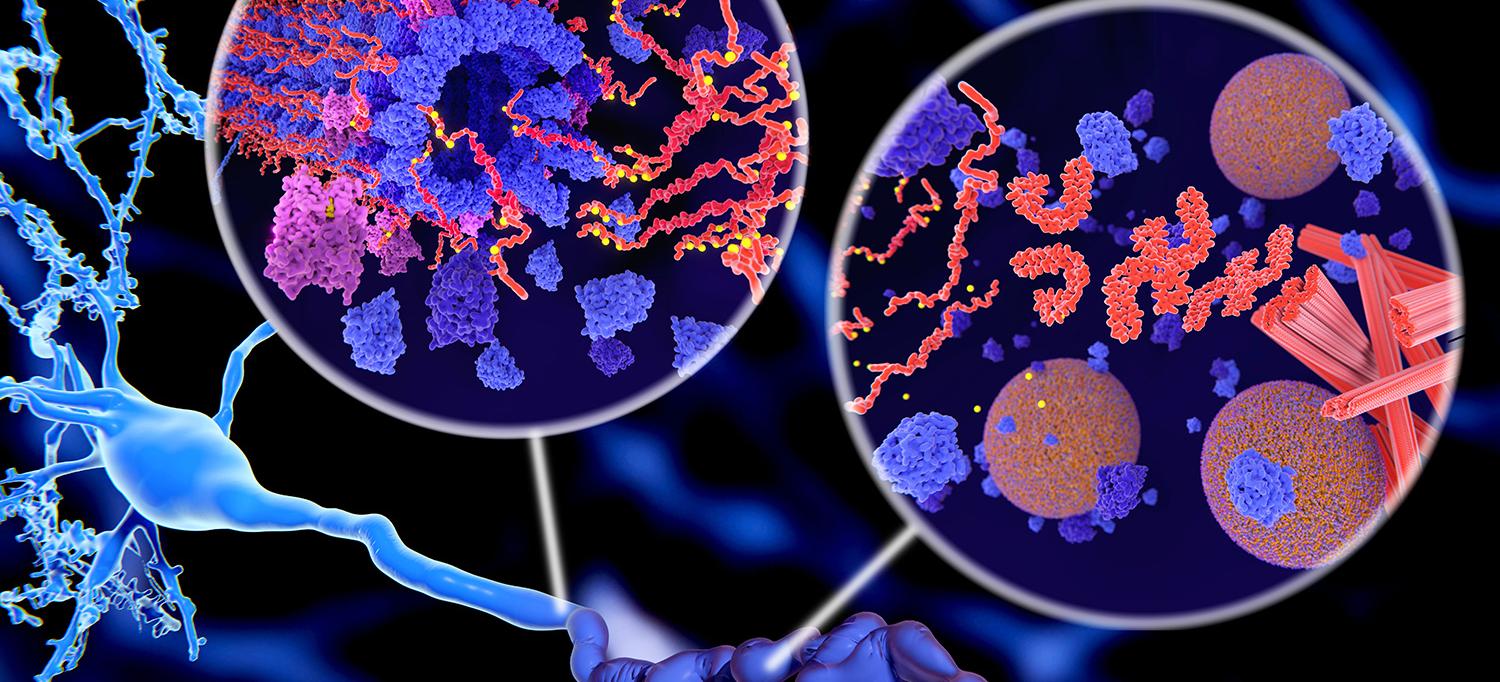
       Many theories exist as to how misfolded tau protein impacts neuronal communication and promotes degeneration, but few have been empirically proven or replicated. Without this key factor, researchers only know what biomarker causes the degeneration (tau) and what impairment it causes, but not how. Unfortunately, without understanding how misfolded tau leads to impairment, it’s difficult to counteract the mechanism causing the impairment. Luckily, a recent study discovered a unique relationship between tau, nitric oxide (NO), and cerebral vasculature that occurs even before tau forms neurofibrillary tangles (NFTs).

       Specifically, in rats with overexpression of mutant tau proteins, the tau can be translocated to the dendrite where it displaces an important protein called neuronal nitric oxide synthase (nNOS) involved in the production of NO in the brain. Under normal circumstances NO is a product of neural activity, signaling blood vessels in the area to expand increasing oxygen to support the increase in activity. This process is called neurovascular coupling. Neurovascular uncoupling occurs in disease models when tau proteins bind to the receptor on neurons that nNOS would normally bind to, thereby preventing NO production and transmission of the signal to expand blood vessels. Reduced blood flow to areas of high activity in the brain prevents many cellular processes that allow for optimal cognition. This is why vascular complications can induce cognitive impairment even without AD.

       Increased blood flow not only provides oxygen and nutrients to neurons, but also serves as a garbageman, taking away unnecessary or toxic proteins. Without clearance of these waste products, they build up much more quickly and induce dysfunction. Mutant tau proteins are one of these toxic molecules that would normally be cleared from the brain by the blood. When not cleared, the tau proteins can aggregate into NFTs inducing further dysfunction and even cell death.

       These findings indicate that tauopathy development supports the progression of its own NFT buildup, through reduction of vascular waste clearance, creating a cycle of impairment and degeneration. If we can find a way to override nNOS silencing by tau, we would expect cognition to improve with further clearance of tau tangles and Aꞵ due to increased blood flow, in turn slowing or halting disease progression.

Facebook
Twitter
Email
Sources:
With Tau in Synapses, NO Neurovascular Coupling [Internet]. Alzforum. 2020. Available from: https://www.alzforum.org/news/research-news/tau-synapses-no-neurovascular-coupling.
Park, L., et al. Tau induces PSD95-neuronal NOS uncoupling and neurovascular dysfunction independent of neurodegeneration [Internet]. Nature Neuroscience. 2020. Available from: https://www.nature.com/articles/s41593-020-0686-7.

What is Hippocampal Sclerosis?

   Today we will discuss Hippocampal Sclerosis (HS), which causes memory impairment similar to, and frequently confused as, Alzheimer’s disease (AD). HS is often misdiagnosed as AD because initial symptoms and rate of progression follow roughly the same pattern, but as the neurodegeneration continues the two disorders diverge. Memory impairment is severe in both HS and AD, but other fields of cognition, such as visuospatial processing and executive functioning, remain relatively unimpacted in most HS cases. This is because the atrophy in HS is highly localized to the memory encoding circuit: the hippocampus and nearby structures.

   HS was first observed in 1825 as a product of epilepsy, which remains a primary cause, HS presents in 30-45% of all epilepsy syndromes and in 56% of cases of Medial Temporal Lobe Epilepsy (MTLE). It is believed that seizures, particularly febrile seizures in childhood, damage the hippocampus and prime it for HS development later on. Another factor influencing HS is age. Some researchers even specify age-related HS as a separate disorder from HS induced by epilepsy, denoted as HS-Aging, which is what we will be focusing on in this blog.

   A study focusing on fine-tuning diagnostic classification of HS-Aging analyzed comprehensive data from 1,422 patients with various dementing illnesses. They determined that 68.1% of those diagnosed with HS-Aging post mortem were incorrectly diagnosed with probable AD prior to their death. This misclassification highlights the importance of understanding the differences between these disorders better, so that treatment can target AD or HS specifically. Luckily, some key differences in the clinical presentation of HS versus AD have been elucidated.

   HS patients show abnormal TAR-DNA Binding Protein 43 (TDP-43) in the hippocampus, with one study determining that 89.9% of patients with HS had abnormal TDP-43 compared to only 9.7% of HS-negative patients. Abnormal TDP-43 presents in other dementing disorders too, such as Frontotemporal Lobar Degeneration (FTLD) and AD, however,the age of death and clinical presentations between HS and FTLD differ significantly making TDP-43 a valuable tool for diagnosis. Unfortunately, abnormal TDP-43 presents in 23% of AD cases as well indicating the need for other differentiating factors for an accurate determination of AD versus HS.

   Psychometric testing can help differentiate between HS and AD in these cases. HS patients tend to have high verbal fluency but low delayed recall due to loss of hippocampal neurons with minimal dysfunction in other domains of cognition. This isolated memory problem in HS patients can often be compensated for with notes and an agenda; allowing them to function normally in social and occupational tasks. AD patients’ early memory dysfunction is not as severe as HS patients but the progression of their non-memory symptoms impact not only verbal fluency but also problem solving. AD patients who have low delayed recall should also have low verbal fluency, visuospatial processing, etc. leading to impaired social and occupational function, while an HS patient would have decreased delayed recall before showing any significant decrease in the other domains of thought (e.g. language, visuospatial function, and problem solving).

   These findings suggest there’s potential to better differentiate diagnoses between AD and HS, although further research is needed. Once accomplished we may develop the capability to treat, or even prevent, HS and removing a confounding disorder frequently categorized as AD will allow for more accurate research into AD as well.

Facebook
Twitter
Email
Sources: 
Norwood, B. A., et al. Classic hippocampal sclerosis and hippocampal-onset epilepsy produced by a single “cryptic” episode of focal hippocampal excitation in awake rats [Internet]. Journal of Comparative Neurology. 2011. Available from: https://www.ncbi.nlm.nih.gov/pmc/articles/PMC2894278/
Nelson, P. T., et al. Hippocampal sclerosis in advanced age: clinical and pathological features [Internet]. Brain. 2011. Available from: https://www.ncbi.nlm.nih.gov/pmc/articles/PMC3097889/
Brenowitz, W. D., Monsell, S. E., Schmitt, F. A., Kukull, W. A., & Nelson, P. T. Hippocampal sclerosis of aging is a key Alzheimer’s mimic: clinical-pathologic correlations and comparisons with both Alzheimer’s disease and non-taupathic frontotemporal lobar degeneration [Internet]. Journal of Alzheimer’s Disease. 2015. Available from: https://www.ncbi.nlm.nih.gov/pmc/articles/PMC3946156/
Amador-Ortiz, C., et al. TDP-43 IMMUNOREACTIVITY IN HIPPOCAMPAL SCLEROSIS AND ALZHEIMER’S DISEASE [Internet]. Annals of Neurology. 2007. Available from: https://www.ncbi.nlm.nih.gov/pmc/articles/PMC2677204/
Nelson, P. T., et al. Hippocampal sclerosis of aging, a prevalent and high-morbidity brain disease [Internet]. Acta Neuropathalogica. 2013. Available from: https://www.ncbi.nlm.nih.gov/pmc/articles/PMC3889169/