
A New Investigational Approach to Clinical AD Treatment: ATH-1017

       Alzheimer’s disease (AD) has long eluded a cure, causing researchers to delve deeper into the biological underpinnings of the disorder for new, inventive, and multi-factorial strategies to reduce neurodegeneration before and after onset. One investigational treatment provided by Athira, called ATH-1017, recently began Phase II clinical trial enrollment with our clinic. If this blog peaks your interest, please feel free to reach out to us and see if you or someone you know might be applicable for involvement in the trial.

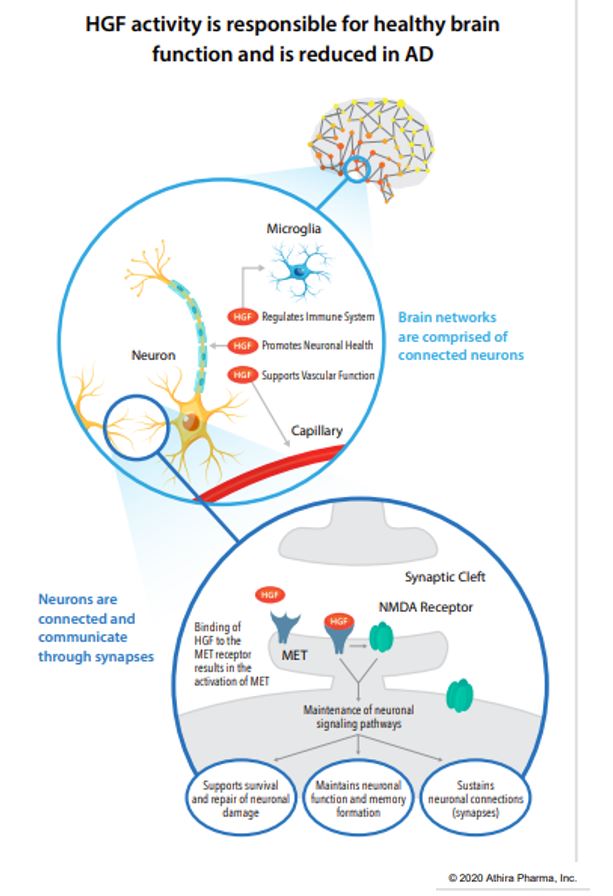
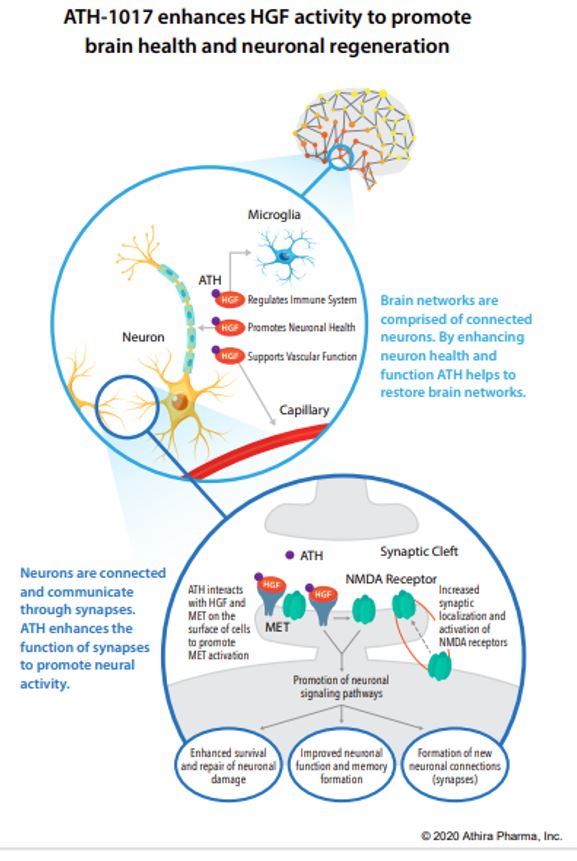
       ATH-1017 is a Hepatocyte Growth Factor (HGF) Receptor Agonist, meaning that administration simulates the presence of HGF, activating a kinase receptor-protein called MET. The HGF/MET complex is a neurotrophic factor meaning, when functioning properly, it protects neurons from degeneration and may induce regeneration of lost neuronal connections in dysfunctioning brain regions (such as the hippocampus in AD). Patients with AD have reduced hippocampal MET receptors. ATH-1017 targets the HGF/MET complex in order to enhance the neuroprotective CNS effects.

       In animal studies the investigational drug improved learning and memory in aged rats, prevented motor symptoms and neuronal loss in rat models of Parkinson’s disease (PD), and stimulated dendritic arborization and synaptogenesis. Furthermore, in humans during a Phase I trial it improved brain activity as measured by gamma power and p300 latency in participants with AD (both measures of increased learning, memory, executive functioning, and processing speed). It also produced a dose-related increase in gamma power in healthy controls suggesting that ATH-1017 may have wide therapeutic effects outside of just AD and PD. Furthermore, in all dosage groups of the Phase I trial, no investigational-drug-related adverse events were recorded, meaning the therapeutic dose required is very safe. Cognitive testing is now added to the new trial in order to assess clinical efficacy.
Facebook
Twitter
Email
Sources:
ATH-1017 [Internet]. Alzforum. 2020. Available from: https://www.alzforum.org/therapeutics/ath-1017
Zhu, Y., Hilal, S., & Lai, M. Serum Hepatocyte Growth Factor Is Associated with Small Vessel Disease in Alzheimer’s Dementia [Internet]. Frontiers in Aging Neuroscience. 2018. Available from: https://www.ncbi.nlm.nih.gov/pmc/articles/PMC5787106/
Wright, J. & Harding, J. The Brain Hepatocyte Growth Factor/c-Met Receptor System: A New Target for the Treatment of Alzheimer’s Disease [Internet]. 2015. Available from: https://pubmed.ncbi.nlm.nih.gov/25649658/

LATE and AD: Clinical Interactions

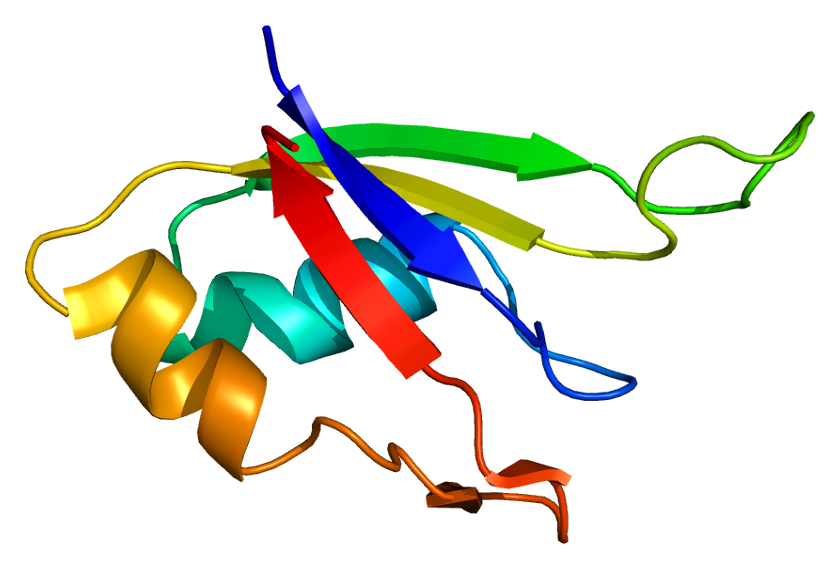
       Most neurological disorders are associated with a biomarker, a protein or biological by-product whose concentration correlates to the development of the disorder. AD’s biomarkers, as you may already know, are amyloid-beta (Aꞵ) precipitated as plaques and misfolded tau protein that forms neurofibrillary tangles (NFTs). Another common biomarker of neurological disorders is TAR DNA binding protein 43 (TDP-43, shown above) which presents in cases of Frontotemporal dementia (FTD), Hippocampal Sclerosis (HS), and Limbic-Predominant TDP-43 Encephalopathy (LATE). But neuropathology is rarely cut and dry which raises the question, “What happens when these biomarkers/disorders occur together?”.

       Recently, researchers answered this question using retrospective analyses on 1,356 elderly participants who were diagnosed at autopsy with either AD, LATE, or AD & LATE (along with cognitively normal participants for control). The researchers used results of cognitive testing over their lifetimes to complete between-group comparisons of cognitive trajectories for global cognition and 5 specific domains (episodic, semantic, and working memory, perceptual speed, and visuospatial processing).

       The results suggest that LATE and AD interact to produce a differential cognitive trajectory. Patients with pure-AD and LATE/AD experience increased decline in global cognition and all sub-domains in comparison to healthy controls. Patients with pure-LATE have increased decline in global cognition, but in sub-domains, only had accelerated decline in episodic memory compared to healthy controls. In comparison to those with pure-AD, those with LATE decline slower in global cognition and episodic memory, while those with LATE/AD decline faster in global cognition and all domains.

       The increased rate of cognitive decline in the AD/LATE group suggests these two disorders appear to have additive effects that produce a specific, accelerated cognitive trajectory. While this may not seem significant, it does support the concept that differential progressions of AD (as well as other neurodegenerative disorders) may be due to interactions with comorbid disorders, such as LATE. This allows for better diagnostics and treatments because, without information about additive effects, physicians may see a patient with AD/LATE and determine that it is a more severe case of AD. Using cognitive trajectories for sub-groups such as AD/LATE, however, they could gain a head-start in diagnosing and treating both disorders.

       Unfortunately, a diagnostic method like this will require a significant amount of research to properly establish due to the amount of people required to create a generalizable cognitive trajectory. Using retrospective analyses, like they did here, saves quite a bit of time but is limited by the outcome measures used in the original study. As such, we will have to make a concerted effort to develop these trends for the numerous neuropathological groups that exist.

Facebook
Twitter
Email
Source:
Kapasi, A., Yu, L., & Boyle, P. Limbic pre-dominant age-related TDP-43 encephalopathy, ADNC pathology, and cognitive decline in aging [Internet]. Neurology. 2020. Available from: https://n.neurology.org/content/95/14/e1951.long